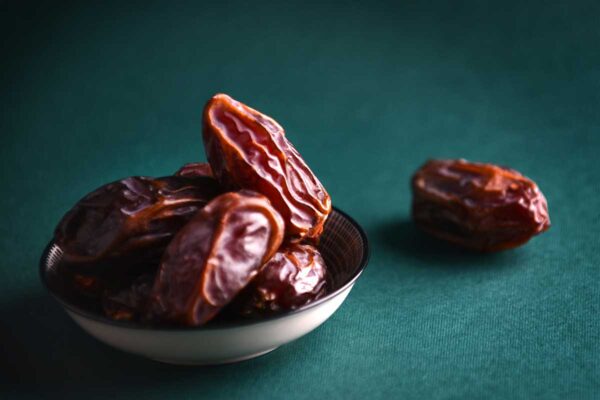
Medjool dates
Dates are oval berries; the deliciously sweet and juicy Medjool variety can grow up to 7 cm in size.
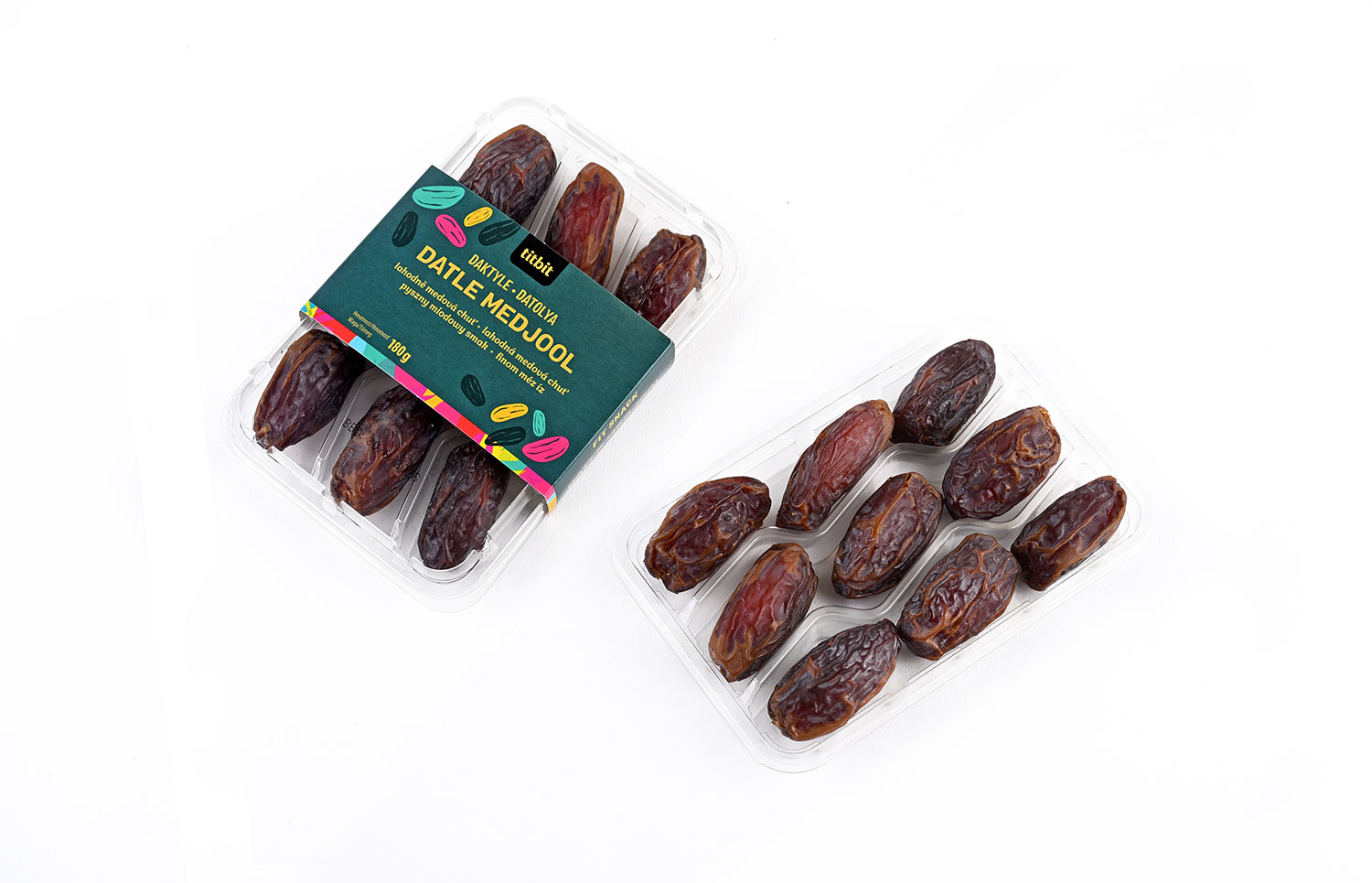

Product line

Packaging
- 180 g PET bowl
Availability by month
- 1
- 2
- 3
- 4
- 5
- 6
- 7
- 8
- 9
- 10
- 11
- 12


cooperation
Are you interested in our product line?
Would you like to know our prices, try some samples, or take a tour of our facility?
We supply restaurants and hotels
Orders 24 hours a day
- Delivery to most cities in the Czech Republic—call +420 608 217 567
They contain a single large seed with a groove down the middle. They are fleshy and resemble a plum in shape. The skin is edible, brownish-red, smooth, and—in dried fruits—sugary and finely cracked.
Dates are mainly eaten dried, which significantly extends their shelf life. In Arab countries in particular, dates are a staple of everyday cuisine; they are usually served pressed into a loaf (called “adshu”) or baked in butter.
They are an integral part of many desserts, cakes, and other sweets, and are the best alternative to candy for both children and adults. In the countries where they are grown, they are popular as table fruit. Sweet syrup, known as date honey, oozes from fresh, overripe berries. They are delicious when stuffed with various delicacies—almonds, hazelnuts, and other nuts; candied orange or lemon peel; marzipan; or cream cheese. They can also be served dipped in chocolate.
Medjool dates are a very rich source of sugar (60–70%), which protects them from drying out in extreme heat. Due to their high sugar content, these fruits are literally calorie bombs. Despite their high sweetness, however, they do not raise blood sugar levels and help protect against clogged arteries. They are also a significant source of potassium, iron, and B vitamins.
Dates are an important staple food and source of energy in the regions where they are grown. They are among the oldest cultivated plants,
and are mentioned in both the Bible and the Quran. Like figs, they originated in North Africa and the Near East. Today, large Medjool dates are grown primarily in Israel and California.