Thyme
Product line



Packaging
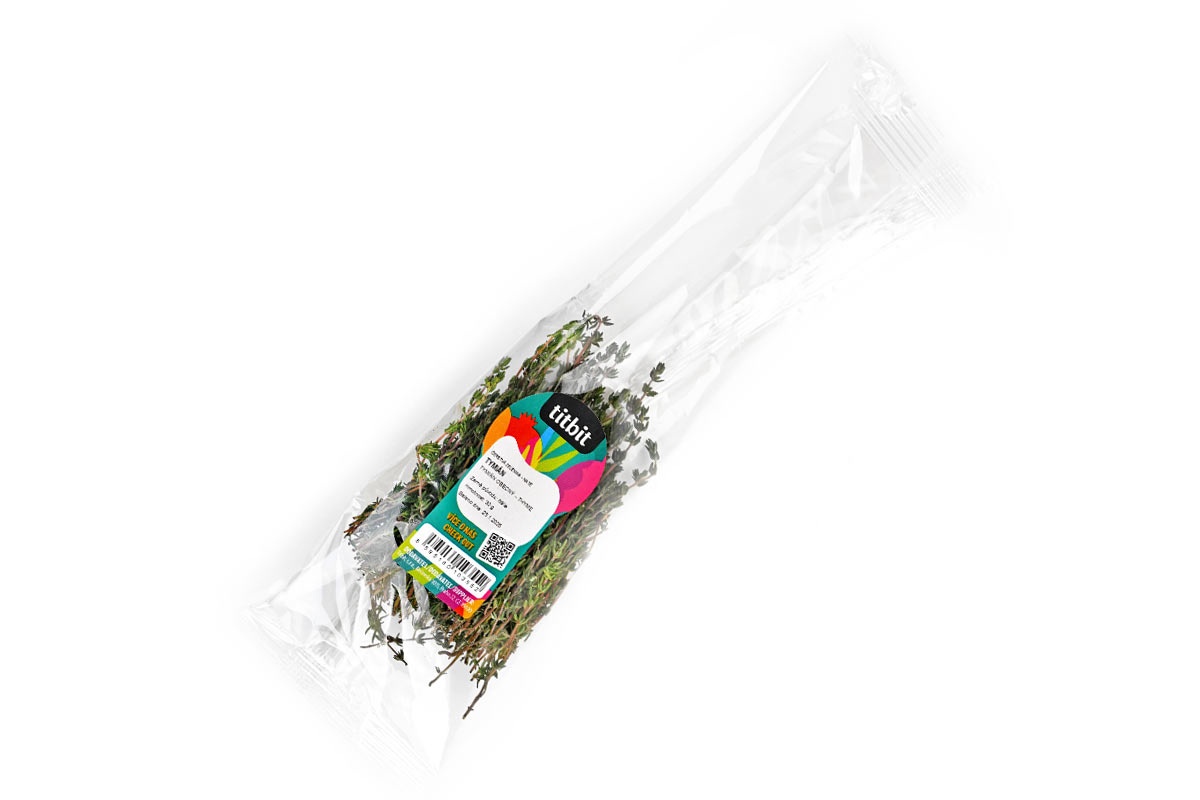
- Flowpack 30 g
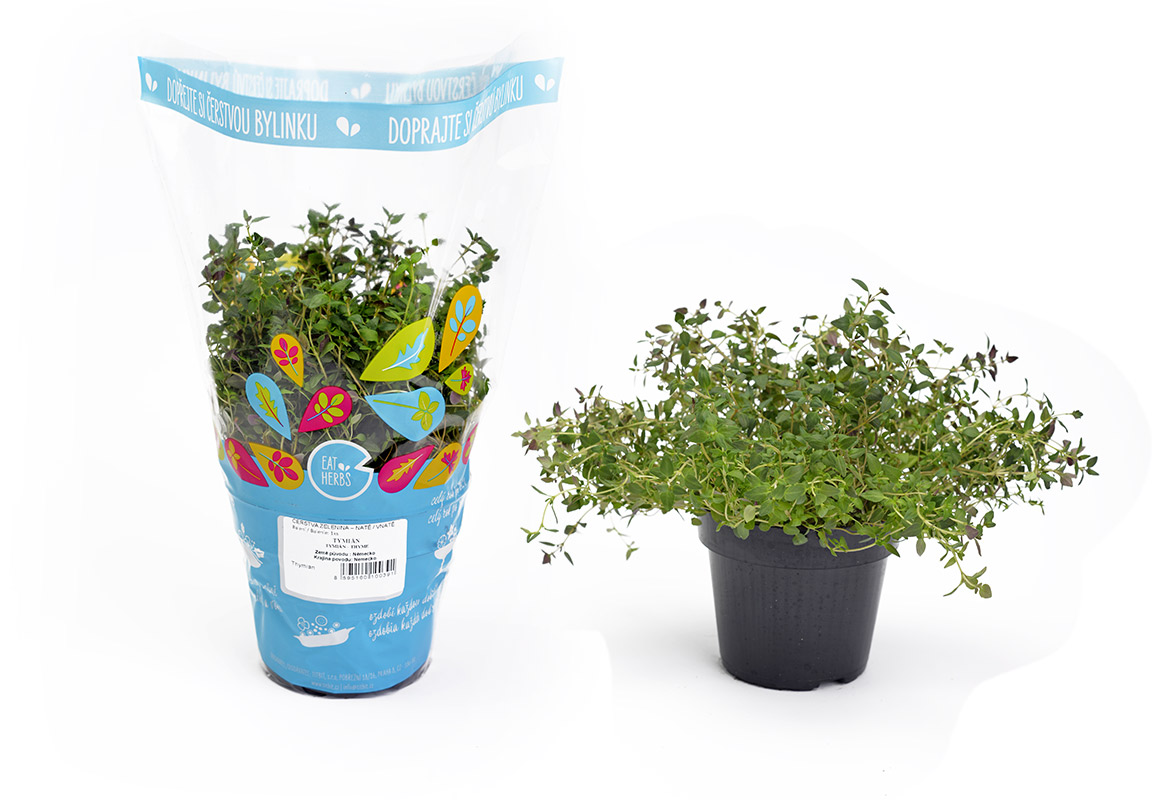
- Květináč 12 cm
Availability by month
- 1
- 2
- 3
- 4
- 5
- 6
- 7
- 8
- 9
- 10
- 11
- 12
Related products and ingredients

cooperation
Are you interested in our product line?
Would you like to know our prices, try some samples, or take a tour of our facility?
We supply restaurants and hotels
Orders 24 hours a day
- Delivery to most cities in the Czech Republic—call +420 608 217 567
Thyme or thyme is a very widespread genus and some of its species are native to our country. However, the species grown as a spice comes from the Mediterranean and, unlike the domestic thyme, it is a semi-shrub. Thyme leaves are small, linear, elliptical or ovoid in some species. The leaves can also be slightly fluffy and tend to be curled at the edges. In addition to green-leaved varieties, there are also variegated varieties, but they are more ornamental. The flowers are very fragrant and attract bees. Thyme honey is highly valued for its unique taste and aroma and, due to its high fructose content, does not crystallize for a long time. The taste and aroma of thyme is bitterly pungent reminiscent of camphor.
Thyme can be used both in a mixture of spices and on its own. Its advantage is that it can be added to the dish right at the beginning of preparation and only very slowly loses its intensity. It goes well with meat, especially game, and vegetables, in various stuffings and sauces. In combination with bay leaf and parsley, it is suitable for meat broths. Fresh thyme is also great for minced meat for meatballs. However, it should be dosed carefully, as it is very strongly aromatic.
Thyme can be harvested even when it is in full bloom, it does not lose its aroma as much as some other species. However, the most aromatic substances in the leaves are just before flowering.
In addition to keeping fresh sprigs in the fridge, thyme can also be dried and pickled in oil or vinegar and then used to drizzle vegetable salads.
The genus name Thymus is derived from the Greek word thymon, meaning courage. Perhaps that is why Roman soldiers bathed in thyme water to give themselves courage. The Egyptians used thyme essential oil as part of embalming oils. Its antiseptic effects help preserve anatomical and herbarium preparations. In the Middle Ages, it was believed that thyme allows a person to see fairies.