


Chayote
Product line

Availability
cooperation
Are you interested in our product line?
Would you like to know our prices, try some samples, or take a tour of our facility?
We supply restaurants and hotels
Orders 24 hours a day
- Delivery to most cities in the Czech Republic—call +420 608 217 567
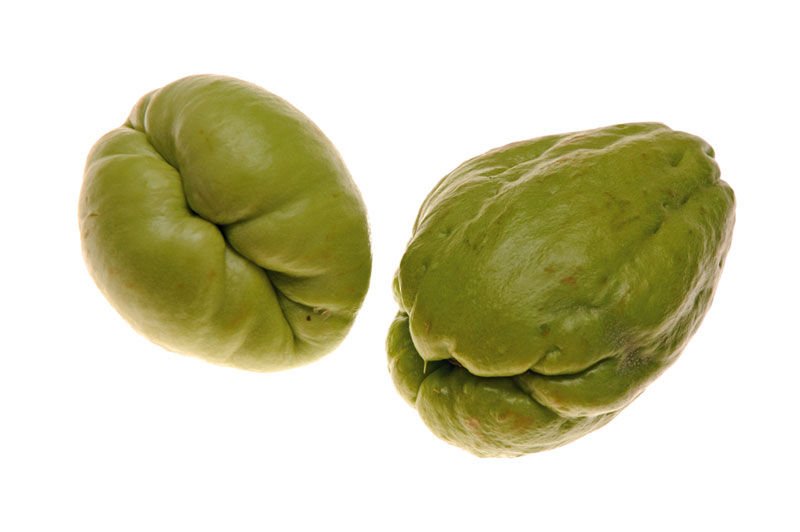
Tropical vegetables with an interesting articulated shape belong to the same "family" as squash, patisson or zucchini and also resemble them in taste and consistency. The most pleasant taste of chayote is close to kohlrabi and cucumber, but it is relatively bland, so chayote is rarely eaten without treatment and seasoning. The fruits vary greatly in size (10-20 cm), shape, color and firmness. Healthy chayote is light green, firm, without brown spots and sprouts. In this state, it will last a long time stored, especially in the cold. The plant is edible whole, soft seeds can also be eaten, which have a delicate nutty taste, in Asia they also consume the root, leaves and shoots.
The fruit does not need to be edged, it is eaten whole and cooked only briefly to remain tender even after cooking. Smaller fruits are more fragile and have a more pronounced taste. The pulp is perfect for Mexican, Asian and Arabic cuisine. Fresh chayote is excellent in salads and salsas, it also tastes great marinated in lemon or lime juice, or in a simple combination with salt, pepper and butter (a popular preparation in Australia). It is cooked similarly to smaller squash – it can be stewed, baked, fried, pickled, stuffed and added to meat and spice mixtures.
Chayote has a high content of water, amino acids and vitamin C. The name chayote comes from the Spanish "chayote", which evolved from the Aztec name "chayotli", which recalls the Central American origin of this plant. It was brought to Europe as one of the many crops colonized in the regions of Central America, where it is still very widely used. The world's largest exporter is Costa Rica.