


Baby Pineapple
Compared to larger pineapples, this small variety has a more tender and sweeter flesh without tough fibers.

Product line


Packaging
- Loose
Availability
Related products and ingredients


cooperation
Are you interested in our product line?
Would you like to know our prices, try some samples, or take a tour of our facility?
We supply restaurants and hotels
Orders 24 hours a day
- Delivery to most cities in the Czech Republic—call +420 608 217 567
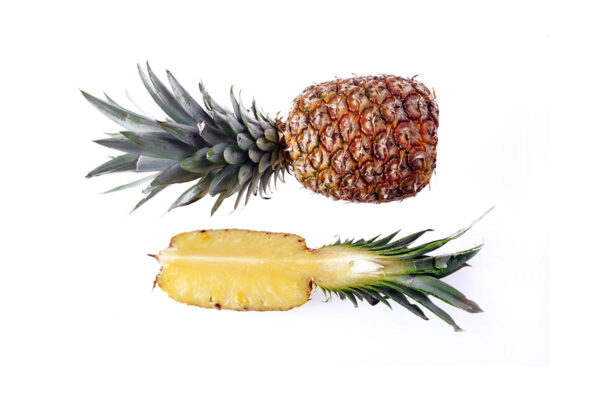
Compared to the classic pineapple, baby pineapples are almost round in shape. The color of the waxy skin can be dark green; in ripe fruits, it is yellow or orange-yellow with green streaks. A green tuft grows from the top of the pineapple, consisting of very sturdy leaves.
The flesh of a baby pineapple is bright yellow, and its flavor is sweeter and milder than that of its bigger counterpart.
You cannot reliably determine the ripeness of a pineapple by the color of its skin. A ripe pineapple has a strong, characteristic aroma near the stem. It is recommended to consume it as soon as possible. However, unripe pineapples can be left to ripen at room temperature for up to 2 weeks. The optimal storage temperature is 10–15 °C. Despite its hard skin, pineapple is very sensitive to bruising.
It is best to eat only fully ripe fruit; unripe pineapples contain high levels of acid and can severely irritate the digestive tract or even damage tooth enamel.
Given the size of a baby pineapple, it’s best to eat it on its own. However, if you’re looking for inspiration, you can add it to salads—whether fruit or vegetable—or to desserts.
The fruit contains large amounts of vitamins C and A, as well as calcium and potassium. Pineapple is also known for its health-promoting detoxifying effects. Among other things, it is rich in biotin, which has a positive effect on the health of hair, nails, and skin. Pineapple fruit also contains varying concentrations of sulfur, so consuming it may cause headaches in more sensitive individuals. Probably the best-known substance found in pineapple is the enzyme bromelain, which breaks down proteins into amino acids; when combined with biotin, it significantly improves digestion and thus contributes to weight loss.
It is native to Paraguay and Brazil, but is grown most extensively in Thailand, the Philippines, Brazil, China, and many African and Mediterranean countries. It takes three years for the pineapple plant to begin bearing fruit, which is reflected in its price.
