


Organic Kent Mango
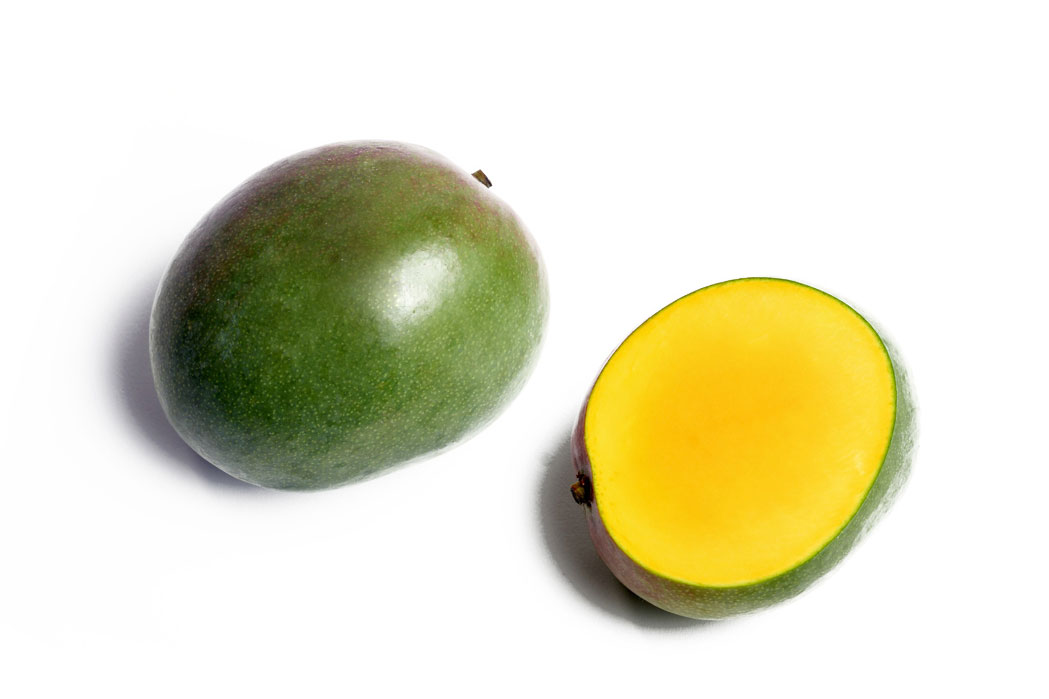
The Kent variety is probably the one we see most often in our stores.

Product line


Packaging
- Twinpack
- Loose
Availability by month
- 1
- 2
- 3
- 4
- 5
- 6
- 7
- 8
- 9
- 10
- 11
- 12
Related products and ingredients


cooperation
Are you interested in our product line?
Would you like to know our prices, try some samples, or take a tour of our facility?
We supply restaurants and hotels
Orders 24 hours a day
- Delivery to most cities in the Czech Republic—call +420 608 217 567
It has a delicate pulp without significant fibers, its taste and consistency resemble a peach.
If you come across a fruit that is a little wrinkled on the surface towards the tip, this is not a defect and it does not change the taste of the mango. Ripe mangoes are soft, flexible on the surface and very sensitive to bruises.
Leave hard and unripe fruits loose at room temperature. On the window sill, unripe mangoes can still be slightly discolored – by breaking down chlorophyll, yellow/orange/red carotenes appear.
When ripe, the taste and consistency of the mango improves. The bound water is released from the molecules and the mangoes are juicier. By breaking down starches, sugars are formed, the mango gains sweetness and its aroma improves.
If we really want to enjoy a ripe mango, let its aroma develop before consumption, again at room temperature.
Mango is best consumed by cutting it lengthwise and removing the large stone. The pulp is removed from the cut fruit with a spoon or the fruit is peeled and then cut into slices or cubes. It is excellent fresh, chilled, alone or in fruit and vegetable salads. The yellow variety Nam Dok Mai is excellent in desserts in combination with coconut milk or cream. Mango is very popular with lovers of cocktails and so-called smoothies, where the fruit is blended alone or with the addition of crushed ice, frozen fruit, honey or yogurt. It is used as a common ingredient in chutneys, as a side dish to salty and meat dishes and sauces. It is also delicious in combination with camembert-type cheese. It is used to make ice creams, juices, dried mango is added to cereals and baked desserts, or to Indian meat mixtures with rice and curry.
Mango contains vitamin A, C, beta-carotene, potassium and fiber. Originally from Burma and India, today it is grown in all tropical regions. The nam dok mai variety is one of the cultivars grown in Thailand.