


Piel de Sapo Melon
Product line


Packaging
- Loose
Availability
Related products and ingredients


cooperation
Are you interested in our product line?
Would you like to know our prices, try some samples, or take a tour of our facility?
We supply restaurants and hotels
Orders 24 hours a day
- Delivery to most cities in the Czech Republic—call +420 608 217 567
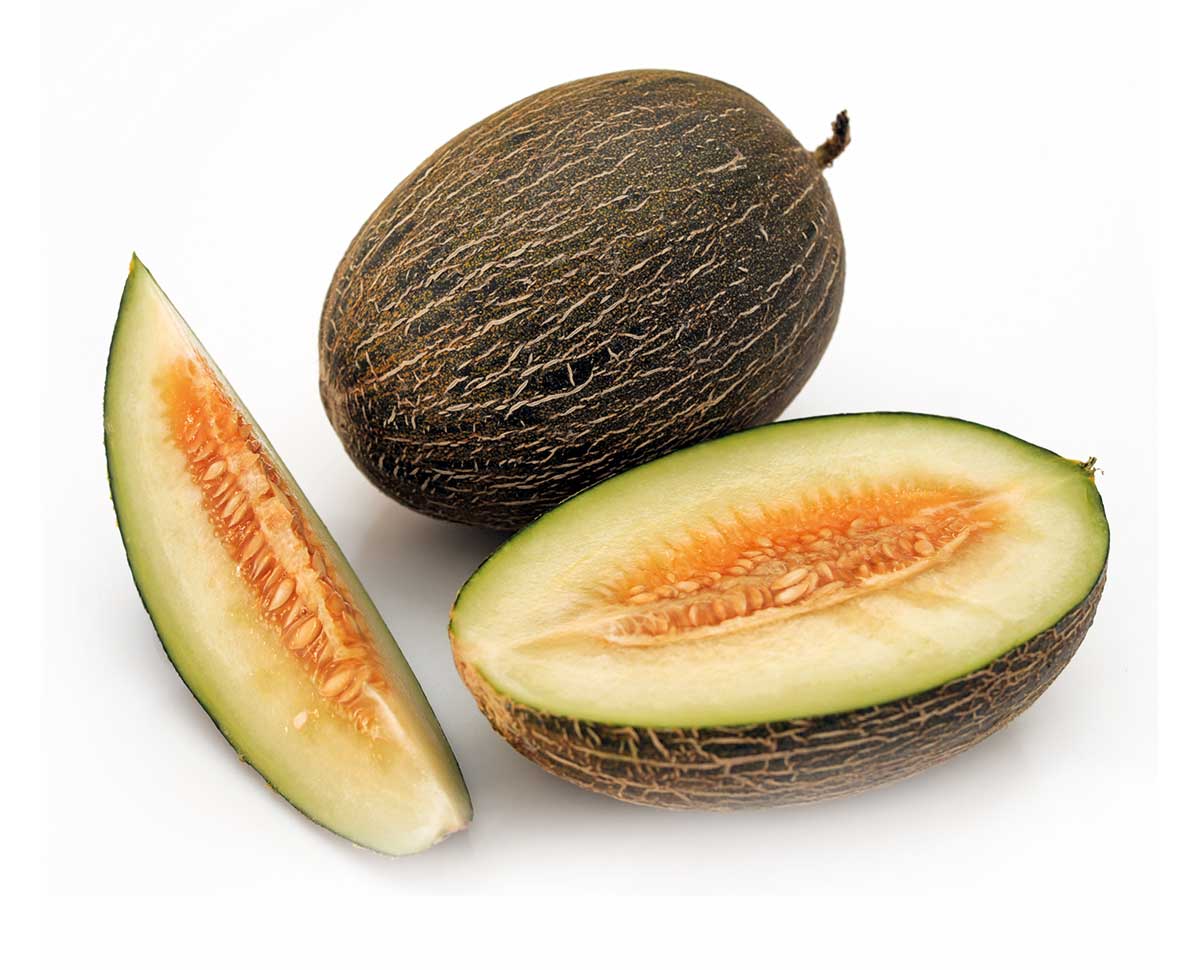
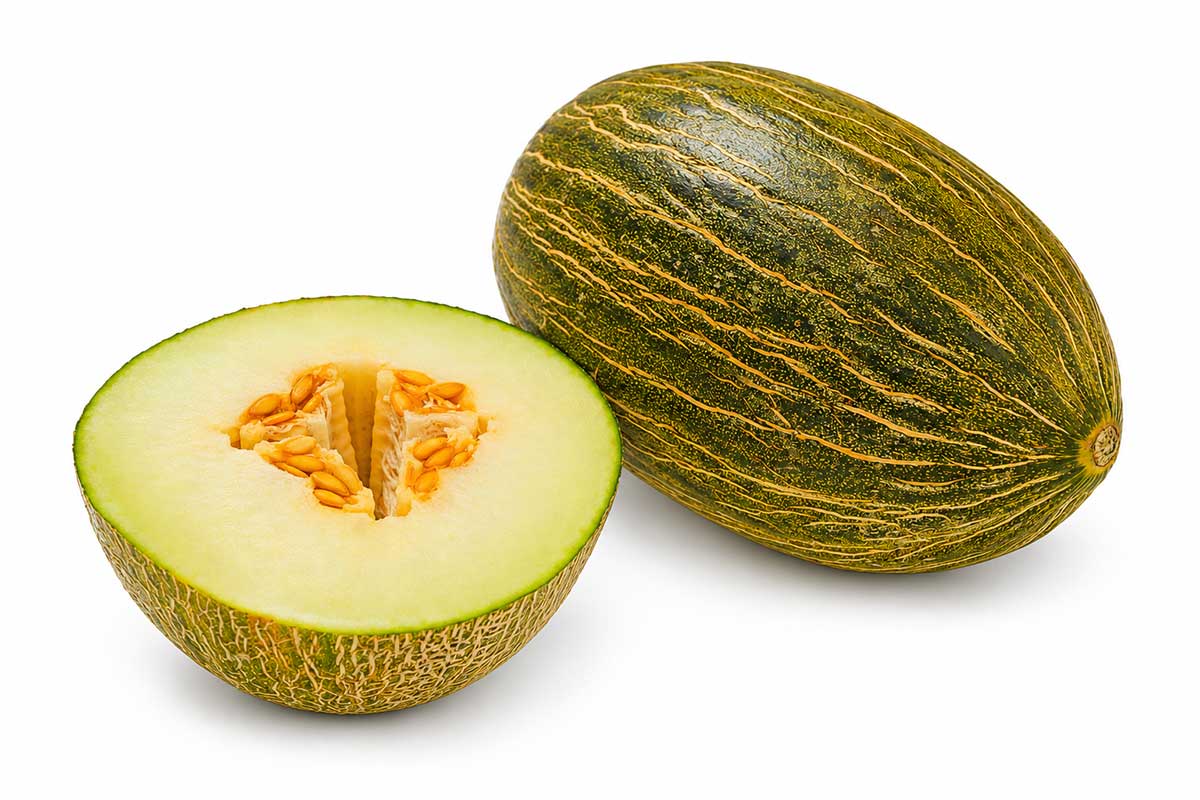
Melon piel de sapo is one of the varieties of honey melons. Belonging to the cucurbitaceae family, it has in common, in addition to yellow, cantaloupe and gallium melon, cucumber, pumpkin or loofah and bitter momordica cucumber. The piel de sapo melon is very similar in shape to a yellow melon, resembling a rugby ball of various sizes. The surface of this watermelon is also bumpy just like that of the yellow watermelon, but its color is medium green with dark green and yellow spots. There is a yellow cheek on the area where the melon lay on the ground. The flesh of the piel de sapo melon is white to light yellow depending on the stage of ripeness. The flesh is about 4 cm thick and the cavity in it is filled with seeds arranged in three longitudinally placed slimy sacs. The taste and aroma of piel de sapo melon is similar to yellow melon. It is sweet and pleasantly aromatic. The consistency is reminiscent of ripe very juicy nectarines when ripe.
Before consumption, the fruit is cut lengthwise, the seeds are removed with a spoon, and then the thin skin is cut off. Watermelon piel de sapo has versatile uses, similar to yellow watermelon or other sugar watermelons. It is most often consumed fresh or in fruit and vegetable salads. In addition, it can be used to make ice creams, smoothies, and smoothies, preferably in combination with any bolder fruit. It can also be used in alcoholic cocktails or sangria. It goes well with all kinds of meat, fish, and seafood. Watermelon piel de sapo can be used to make purees, salsas, and dips for grilled specialties.
A reliable indicator of ripeness is the aroma that the watermelon gives off. The skin is yellower and the cheek at the base of the melon is deep yellow. Melons exposed to direct sunlight when ripening (watermelons uncovered leaves of the plant) may also have brownish-green or blackish spots on the surface, which are not a defect. Melon piel de sapo still ripens even after harvest.
Sugar melons were cultivated as early as ancient Egypt, Greece and Rome. Their origin is not fully understood, but one theory is that their home is India, and they spread to Europe thanks to ancient trade routes. The name of the melon piel de sapo is derived from the color and structure of the peel resembling frog skin. The exact translation from Spanish means ‘toad skin’. The largest producer of piel de sapo melon in Europe is Spain. It is followed by the Netherlands and France in a smaller one. The main non-European growers are Brazil, Costa Rica and Israel.