


Pomelo
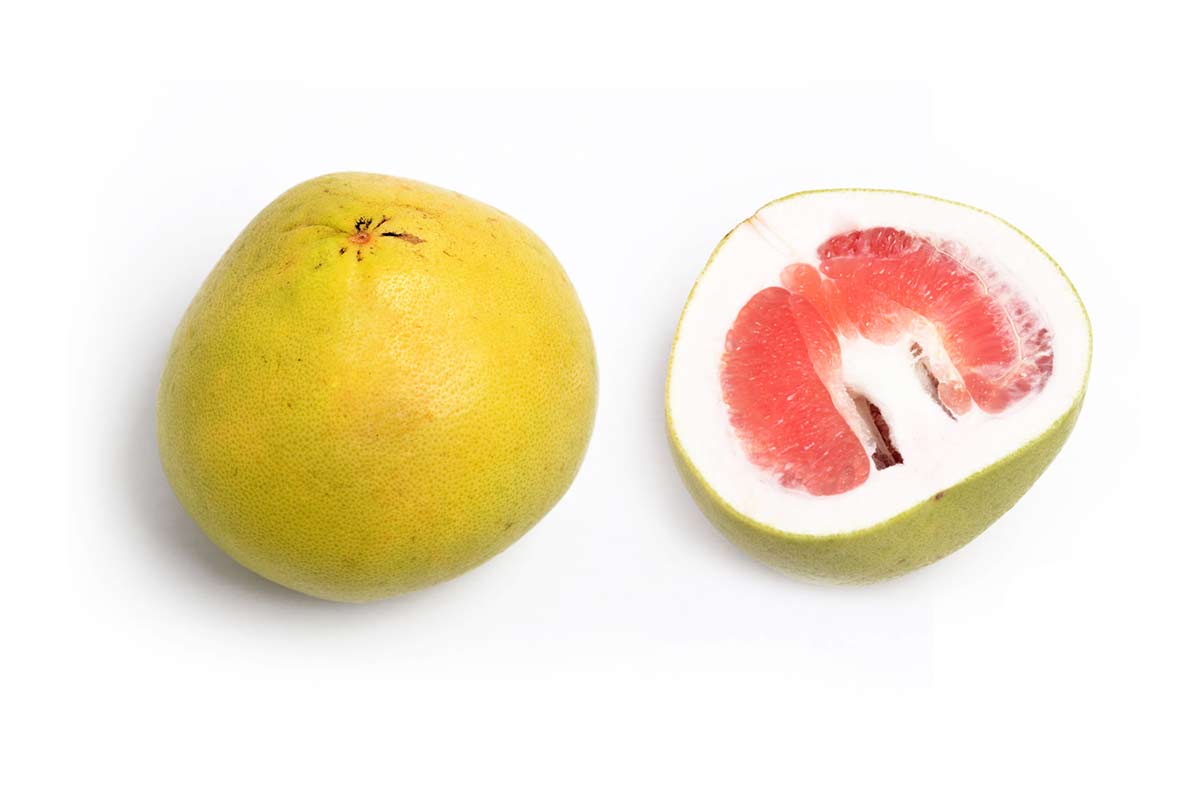
The pomelo is the largest citrus fruit, reaching 15–25 cm in diameter and weighing up to 2 kg.


Product line


Packaging
- Loose
Availability by month
- 1
- 2
- 3
- 4
- 5
- 6
- 7
- 8
- 9
- 10
- 11
- 12
cooperation
Are you interested in our product line?
Would you like to know our prices, try some samples, or take a tour of our facility?
We supply restaurants and hotels
Orders 24 hours a day
- Delivery to most cities in the Czech Republic—call +420 608 217 567
It is most often light green to yellow in color, with sweet white, in some species pink to red flesh similar to grapefruit, but without seeds or only with small seeds. The skin is thick, dense, shiny and porous on the surface, white and spongy closer to the flesh. In terms of taste, it is most reminiscent of a milder, sweeter grapefruit, without bitterness or only slightly bitter. However, the blanks covering the individual pieces are bitter and not consumed. The nam roi variety comes from Vietnam and is refreshing, slightly rolled and bitter. The honey pomelo variety is grown in southeastern China, it is only available on the market between November and March. It does not contain seeds, is very juicy, delicate and has a distinctive honey aroma. It has a sweet, only slightly wound taste.
A healthy pomelo should have a shiny skin, elastic but firm to the touch. It can withstand long storage, especially in colder environments.
The pulp is eaten raw, made into juice, mixed drinks, and added to fruit and vegetable salads. The peel is used to make marmalade or candied in sugar or dipped in chocolate. It is also often used in Chinese cuisine to prepare hot dishes, as well as the peel of other citrus fruits – most often in sweet dessert soups. In the Philippines, the sliced pulp is ground with salt before consumption, and combinations with meat, salt, seafood or herbs are very popular and tasty here.
Like all citrus fruits, it is high in vitamin C, magnesium, calcium, copper and other trace elements.
It is native to Southeast Asia, grown in the USA, China, southern Africa, Mexico and Syria.
