


Guava
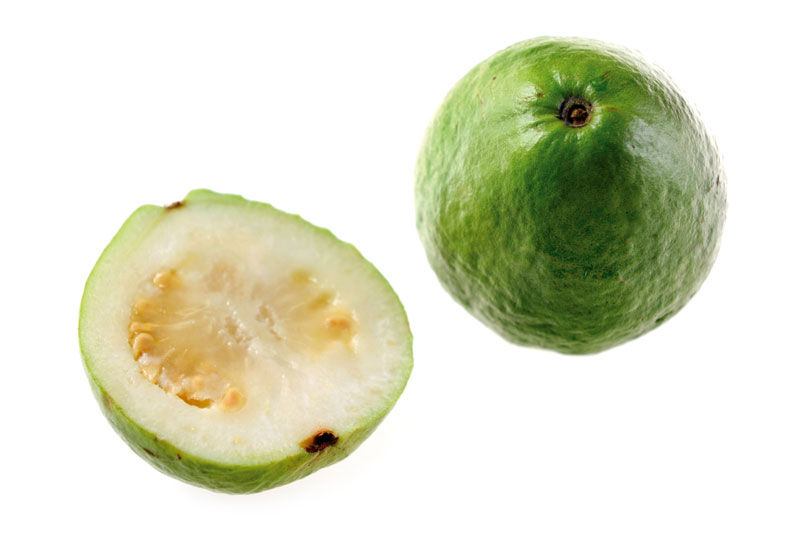
Guava fruits have a soft, waxy skin; they are green at first and turn yellow when fully ripe.
Product line


Packaging
- Loose
Availability
cooperation
Are you interested in our product line?
Would you like to know our prices, try some samples, or take a tour of our facility?
We supply restaurants and hotels
Orders 24 hours a day
- Delivery to most cities in the Czech Republic—call +420 608 217 567
They have a spherical to oval shape, the surface is usually bumpy and bitter, or, on the contrary, smooth, shiny and sweet, densely covered with dots. The creamy flesh is white, yellow to deep pink, with a distinct aroma similar to lemon, but less aggressive. Inside there are many small square seeds arranged in a circle. It tastes like figs and pears, depending on the species it is very sweet or sweet and sour. The flesh contains a lot of pectin, so it has a rather jelly-like consistency. The seeds can be eaten together with the pulp.
Unripe fruits are green, fully ripe straw yellow. A ripe fruit succumbs slightly to finger pressure.
Most often, the fruits are eaten raw, cut into quarters with a pinch of salt and pepper. They are also used for the preparation of desserts, juices and jellies (the high pectin content in the peel is mainly used here). Especially red guava is used to prepare sauces, where it can serve as a substitute for tomato apples.
It is one of the fruits with the highest content of vitamin C (about 5 times more than lemons or oranges). The fruits also contain about 15% sugars, a lot of vitamin A and a significant amount of calcium, phosphorus and trace elements. The seeds are rich in omega-3 fatty acids and fiber. It comes from the central and northern part of South America, where its fruits are very popular and widely used. It is currently grown in other areas, such as India, South Africa and the Mediterranean.