


Chestnuts
Packaging
- 400g
- 500g
Availability
cooperation
Are you interested in our product line?
Would you like to know our prices, try some samples, or take a tour of our facility?
We supply restaurants and hotels
Orders 24 hours a day
- Delivery to most cities in the Czech Republic—call +420 608 217 567
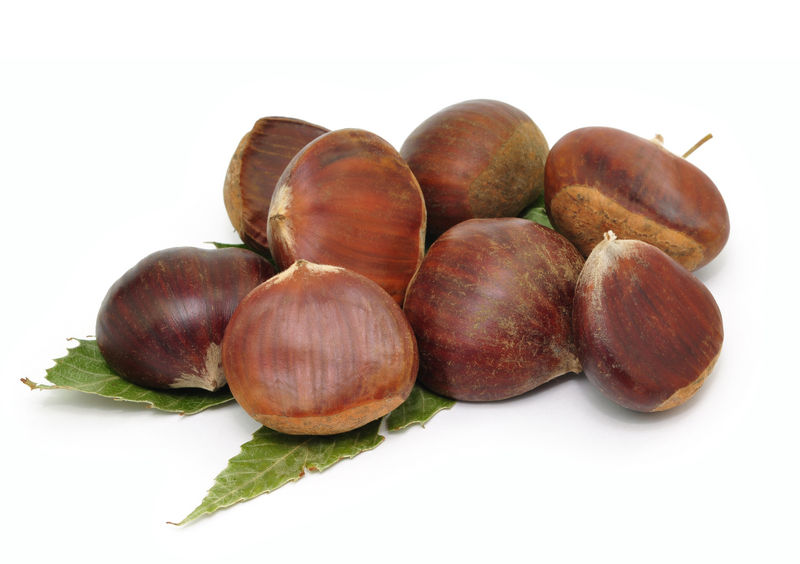
Edible chestnuts – the fruit of the chestnut tree – are an inseparable part of autumn. However, their great taste and spicy aroma are not the only thing that gourmets admire about them. They are very healthy and, especially during autumn, when there is not enough sunlight, they can help us lift our mood and drive away gloom. Their consumption is also beneficial for those who are being treated for kidney or heart problems. Their preparation is easy, quick and the subsequent use varied.
Chestnuts must always be cooked before consumption, they are not eaten raw. Before any kitchen preparation, you must cut the skin, in the shape of a cross, with a cut about 3 cm long. Cut the entire thickness of the peel, you can easily go into the chestnut flesh, it is not a bad thing.
Chestnuts baked in the oven – bake in an oven preheated to 200 °C. Place the chestnuts on a baking sheet, cut side up and bake for about 15 to 20 minutes. The skin begins to darken, the cut opens and the exposed chestnut flesh begins to turn dark. This is my favorite way of preparing chestnuts. Just make sure that the skin is only dark brown, not black and burnt.
Boiled chestnuts – boil in boiling water, about 8-10 minutes. Drain the water, wrap the chestnuts in a cloth and crumple to crush the skins.
Pan-roasted chestnuts – prepare chestnuts over an open fire, such as on the grill. To do this, you need a special perforated pan where you pour the cut chestnuts. You need to shake the pan often so that the chestnuts do not burn. They take about ten minutes to prepare, and you can recognize the finished chestnuts by their brown, toasted skin. Be careful not to burn the chestnuts.
Peel baked or boiled chestnuts as warm as possible, their skin is softer and easier to peel. Along with the skin, the bitter fibers are peeled off and only the beautiful, smooth and shiny interior of the chestnut remains, with which you can conjure up sweet and savory dishes.
The chestnut tree, sometimes also called the edible chestnut tree, is a deciduous deciduous tree native to Asia Minor. Together with beeches and oaks, it belongs to the beech family. This 20 to 25 meters high and spreading tree has fruits called edible chestnuts, sometimes also marons. The chestnut tree blooms in May and June. The fruits are stored in a leathery shell and a spiny prickly calyx, which bursts with four seams when ripe. Chestnuts ripen in September, at this time they are shiny and dark brown, after peeling a yellowish core is revealed. The leaves have the shape of an elongated ellipse and are alternately arranged. The chestnut tree is a long-standing tree, it lives to be more than 1000 years old. In the Czech Republic and elsewhere in Central Europe, hot edible chestnuts belong exclusively to the pre-Christmas period, in southern Europe edible chestnuts have become a common part of the diet. They are eaten baked, boiled, in soup, or porridge is prepared from them. In short, they have a wide range of uses in the kitchen. The chestnut tree is not grown much in our country, it thrives especially on the warm slopes in the wine-growing regions of South Moravia.
It is possible to grow an edible chestnut from seeds that have a relatively high germination rate (up to 70%). We can buy seeds in a gardening store, or before Christmas at a stall, when we buy a bag of edible chestnuts. Peel the chestnut carefully so as not to damage the sprout, and leave it in a bowl of water (half to 1 cm) for some time. As soon as the sprouts grow a little, plant the chestnut with the sprout down in a cup or pot. Outdoor soil or sand mixed in half with soil is suitable as a substrate. Since the edible chestnut receives nutrients through mycohyrtic fungi, which mediate the transfer of nutrients to the root system, it is necessary to provide it with these fungi. Plant the grown seedlings in deep, loose soil that has a high content of phosphorus and potassium. It is important that the soil is well drained, because heavy clay soils are ideal for the spread of diseases and rot. It is a good idea to plant peat or soil for conifers at the bottom. In our climatic conditions, chestnut trees can suffer from frosts, so young trees need to be protected with jute. They also need to be protected from the spring sun, which could cause the bark to crack and thus contribute to the development of fungal diseases. Chestnut trees should be planted in open soil at the earliest in mid-April.
The main harvesting season for edible chestnuts is October, the harvest is mainly done by hand. Edible chestnuts contain a lot of starch and protein, as well as vitamins A and B (B1, B2, B5, B6), a lot of minerals such as phosphorus, calcium, potassium, magnesium and iron. Eating edible chestnuts thus has a positive effect on hair, skin, but also the cardiovascular system. It also helps with fatigue and stress, liver and respiratory disorders. The beneficial effects of edible chestnuts are also known for hematopoietic disorders. Since chestnuts do not contain glucose or fructose, even diabetics can enjoy them without fear. They can also be consumed by people allergic to gluten and suffering from celiac disease. When choosing unpreserved chestnuts, be careful to choose only fresh, hard fruits without holes. The best pieces should be relatively heavy in relation to their size. If you shake the chestnut and hear a hollow sound, it means that the fruit is drying out. When buying, take a good look at the chestnuts so that they are not moldy - mold attacks them very easily. Chestnuts appear on the Czech market mainly from China and they are just intended for consumption as baked. The harvest begins there during September, so the first containers appear in the Czech Republic, after a month-long journey at sea, at the end of October. Growers freeze the chestnuts after harvest and transport them at a temperature of -1 to -2°C. Such freezing does not affect the chestnuts and is ideal for storage. After arriving in Europe, we store chestnuts at a temperature of around 2°C and they are displayed on store shelves at room temperature. For this reason, we do not recommend freezing chestnuts back, as they could suffer a temperature shock. Chestnuts are prone to weight loss, which is caused by the evaporation of water from the fruit. You could say that lighter fruits are older and the extreme is when the pulp flies inside the chestnut. To a lesser extent, Italian or French chestnuts are transported. These are then used more for cooking. We bring peeled, pre-cooked and vacuum-packed French chestnuts for restaurants, which taste the best.


