


Sapodilla
Product line

Availability
Related products and ingredients
cooperation
Are you interested in our product line?
Would you like to know our prices, try some samples, or take a tour of our facility?
We supply restaurants and hotels
Orders 24 hours a day
- Delivery to most cities in the Czech Republic—call +420 608 217 567
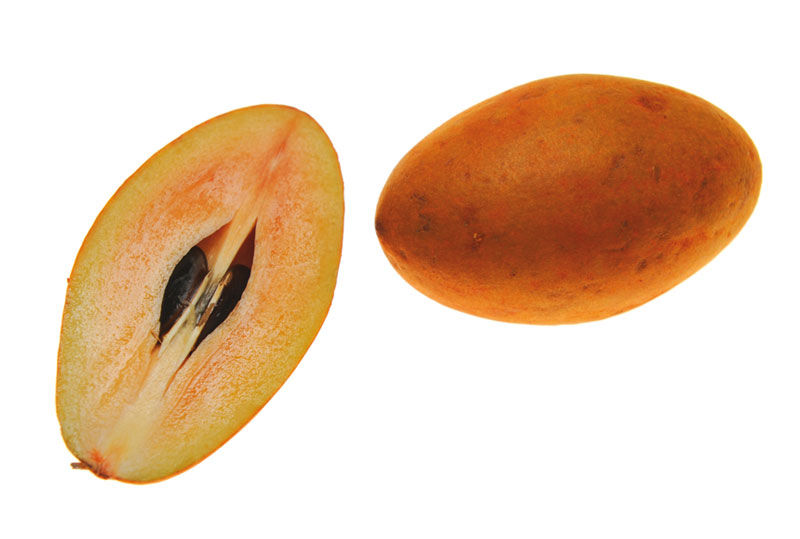
The fruits of the sapodilla are flattened, elliptical to ovoid in shape, usually 5 to 10 cm in size, resembling a smooth potato. Unripe sapodilla is hard, rubbery, very bitter due to its high tannin content, and the fruits are covered with light brown scales of leathery skin. Ripening removes tannin, except for a small amount that remains in the skin of the fruit. Ripe fruits are smooth on the surface. The color of the flesh is from yellowish to dark brown, sometimes reddish-brown, it can be coarse and somewhat grainy, but also smooth, juicy after softening, the taste and aroma is similar to very sweet pears with a hint of caramel. The fruits usually contain 3-12 easily removable brown or black seeds growing freely in the central part of the fruit. Be careful, eating more than 6 seeds can cause abdominal pain and vomiting, in addition, there is a small “hook” on the seeds that can injure the neck if swallowed.
Firm ripe sapodillas can be stored for several days in the refrigerator, they can also be frozen. Fully ripe fruits stored at a temperature of around 0°C can stay in good condition for up to one month. They ripen at room temperature.
Sapodilla is most often eaten raw, chilled, peeled, or halved with a spoon.
In a firm skin, it can be served halved as a dessert fruit. The fruits of the sapodilla are also peeled and cut, and the pulp is added to desserts, fruit salads and sundaes, or to egg cream before baking. Heat treatments are rather exceptional, but interesting recipes can be found, mainly from Indonesia or Malaysia. The mashed pulp is added to pancake or bread dough. The pulp cooked with sugar acquires a beautiful red color.
It contains vitamin C and a lot of fruit sugars. It is grown primarily in tropical America, especially Mexico and the West Indies, but it thrives in all tropical regions. A significant by-product from the tree is a rubber latex called chicle.