


Salak
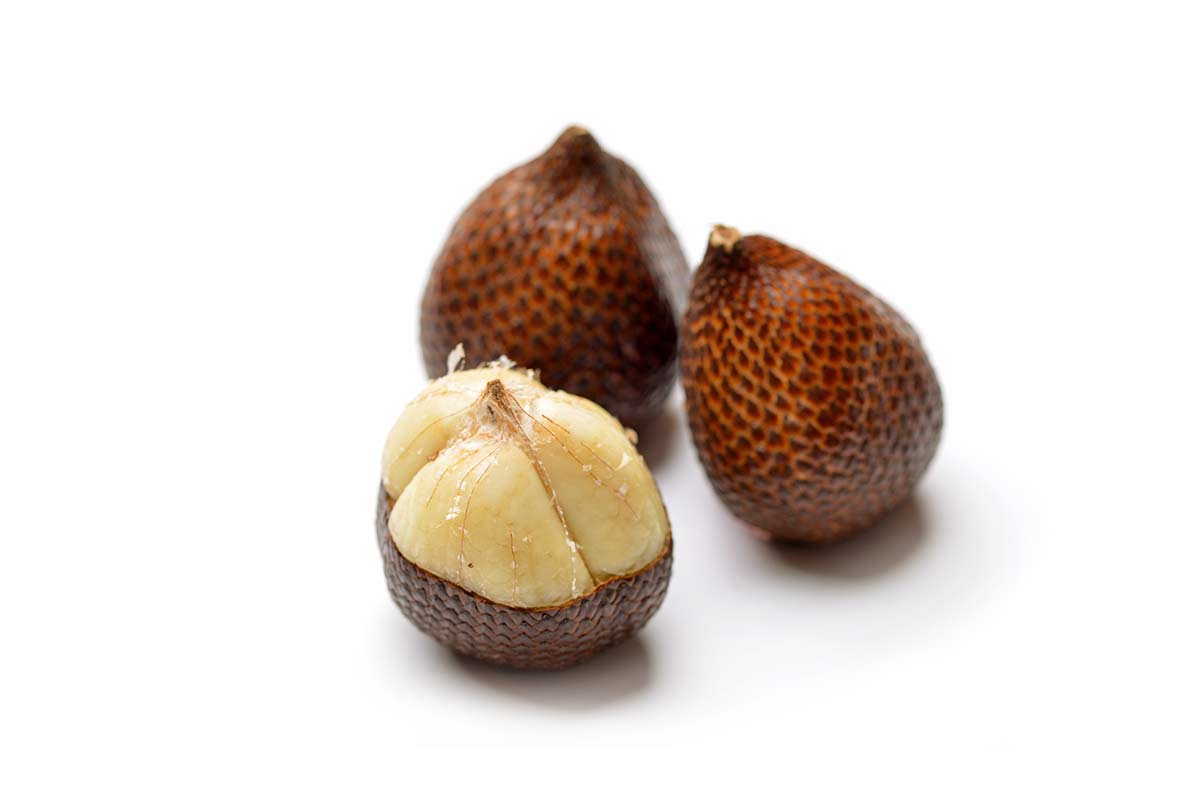
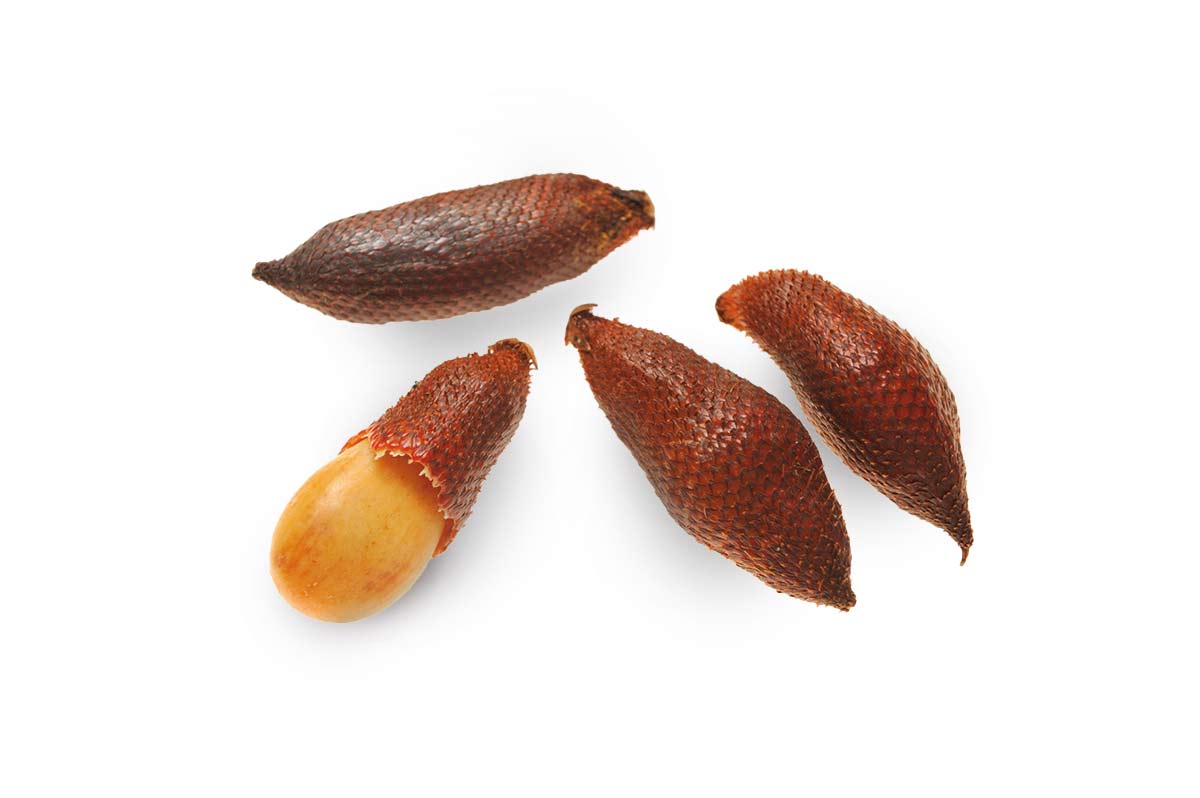
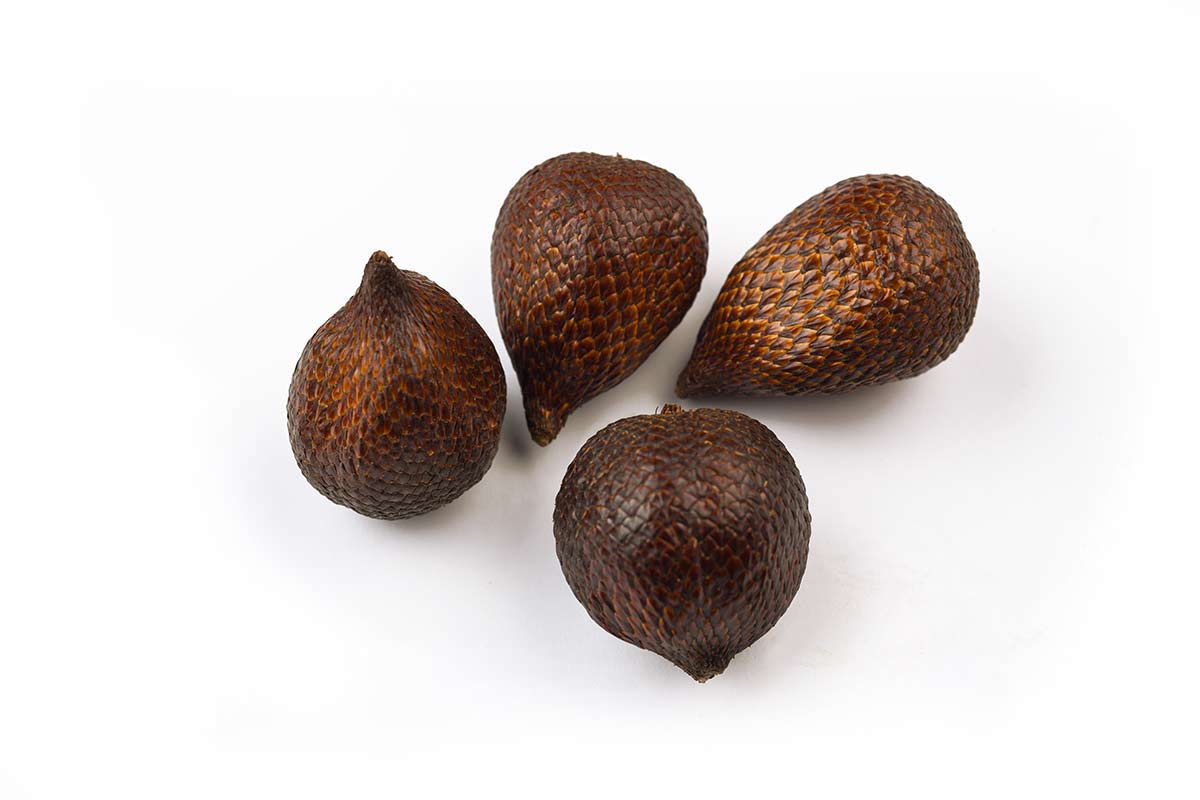
The fruits are oblong-oval, similar in shape to large figs, with a pointed tip, and 6–10 cm long.
Product line


Packaging
- Loose
Availability
cooperation
Are you interested in our product line?
Would you like to know our prices, try some samples, or take a tour of our facility?
We supply restaurants and hotels
Orders 24 hours a day
- Delivery to most cities in the Czech Republic—call +420 608 217 567
The skin is shelly, but very thin and fragile, with many small thorn-like protrusions on the surface, so it is recommended to peel the fruits with gloves. The surface is dark reddish-brown, shiny and strikingly resembles snake skin. The flesh can be colored from milky whitish to dark orange, and is divided into segments resembling large cloves of garlic. It is soft and firm, fragile, mostly reminiscent of apples in consistency. Its taste is very specific, strongly aromatic, slightly wound, may resemble pineapple with an admixture of strawberries and bananas.
Each segment of the pulp contains a black, inedible and hard seed.
When peeling, the tip is first twisted – the fruits then peel better.
Salak fruits are mostly eaten raw, but they are also excellent for desserts. Unripe fruits with an astringent taste can also be pickled
in vinegar as a vegetable.
Native to Southeast Asia, mainly Malaysia and Indonesia. It is mostly grown in Thailand. The most delicious varieties are considered to be salak Pondoh or salak Bali, which are the sweetest. Its main season lasts from May to September.
Due to its shelf life, salak was a popular fruit among South Asian pilgrims who took this fruit with them on a pilgrimage to Mecca.