


Durian
Product line


Availability
cooperation
Are you interested in our product line?
Would you like to know our prices, try some samples, or take a tour of our facility?
We supply restaurants and hotels
Orders 24 hours a day
- Delivery to most cities in the Czech Republic—call +420 608 217 567
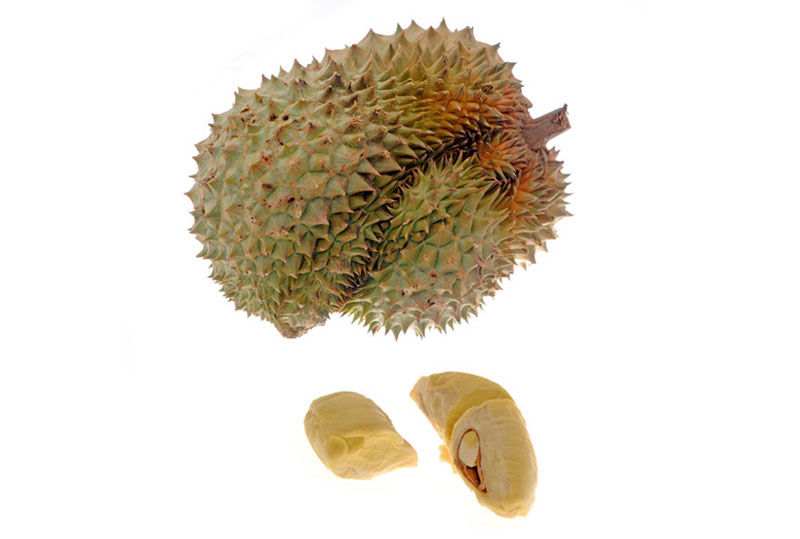
Elliptical or rounded fruits weighing up to 5 kg, which open with three to four valves. The seeds, arranged in rows, are surrounded by juicy, soft, creamy-yellowish to reddish flesh. The rind is thick, green to greenish-yellow, brownish in some species, and covered with thick, spiky protrusions. The fruit emits a pungent odor, reminiscent of rotten onions.
A ripe durian can be recognized by its characteristic odor and also by the fact that it begins to split lengthwise. The taste of durian is truly delicious, very distinctive—fruity, spicy, and subtly reminiscent of almonds. The fleshy, almost custard-like pulp tastes partly like vanilla and partly like onion. Despite the unpleasant odor, the fruit is very popular.
In the monsoon region of Asia, durian is used to flavor various savory and sweet delicacies, including ice cream, cookies, cocktails, and even cappuccino. However, it is mainly consumed on its own, either raw or in various combinations, such as with salt, vinegar, and onion. It is also commonly prepared with onion and chili pepper, in which case it serves as a side dish. The seeds, whether boiled, roasted, or fried, are also edible.
Durian is available already peeled. It must be consumed immediately after opening. It can be eaten even before it is fully ripe, when the flesh is more tender, firmer, and less aromatic. With whole fruits, the quality can be determined by the stem—it dries out on older fruits.
It contains a lot of sugar, vitamin C, protein, and fat. In Southeast Asia, the durian is considered the ultimate fruit delicacy and is called the “king of fruits.” Many animal species also feed on it, even carnivorous tigers. However, its odor is so intense that in the regions where it is grown, there is an official ban on bringing durian into hotels and airplanes.
It grows only in Asia. Native to Indonesia, Malaysia, and Brunei, it grows in the tropical rainforests of Indonesia, southern India, and Thailand. The Thai variety is less aromatic and sweeter.