


Arugula – rocket
Product line


Availability by month
- 1
- 2
- 3
- 4
- 5
- 6
- 7
- 8
- 9
- 10
- 11
- 12
cooperation
Are you interested in our product line?
Would you like to know our prices, try some samples, or take a tour of our facility?
We supply restaurants and hotels
Orders 24 hours a day
- Delivery to most cities in the Czech Republic—call +420 608 217 567
The spicy taste of this herb is known mainly from Italian cuisine. It is not demanding, so it is possible to grow it at home. Due to its pungent bitter taste, it can be added to various dishes – from salads, through pizzas and pasta to meat mixtures. It is often confused with rocket, its relative, which has similar uses and properties. It was widely used by the ancient Romans, who even considered it an aphrodisiac.
Arugula has a very wide range of uses in the kitchen – it can be served both raw and hot – boiled or sautéed. It is characterized by its spicy mild taste, it goes well with meat, pasta, risotto, soups, pizza and especially salads. Thanks to the richly cut leaves, it is also used to decorate dishes. It can be cooked similarly to spinach and served as a side dish, for example with stews. It is also used to make a tasty soup or added to leek soup. In terms of taste, it replaces kale in this preparation. Cooking kills its sharp taste and all irritants and is also suitable for children. It is also added to butter, which is served with steaks. The taste combination with seafood is excellent, chopped is also suitable for minced meat.
Arugula goes well with tomatoes, garlic and basil, which is why it can be found in many Italian dishes. It is traditionally added to vegetable salads, but its bitter taste can also diversify salads made from naturally sweet fruits, such as oranges, pears or pineapple.
Arugula is an herb from the cruciferous family, it is a distant relative of radish, which it resembles with its sharp pungent taste. The sharp, even bitter peppermint-like taste similar to mustard is caused by various essential oils. It comes from the Apennine Peninsula and contains many vitamins that benefit human health and strengthen immunity. Its small leaves resembling narrower elongated dandelion leaves are consumed.
It is very resistant and undemanding, even to mild frosts, and can be grown at home. Like other salads, arugula only takes a few weeks from sowing and can be harvested. It is not necessary to harvest the whole plant at once, individual leaves can be pinched off as needed.
As with other herbs, arugula can be found either in a cultivated form or in wild form. “At Titbit, we keep three types of arugula in stock for restaurants – Italian, Italian prana and Israeli. It always depends on the chef which one he prefers and they are often sensitive to their selection,” describes Marek Řondík.
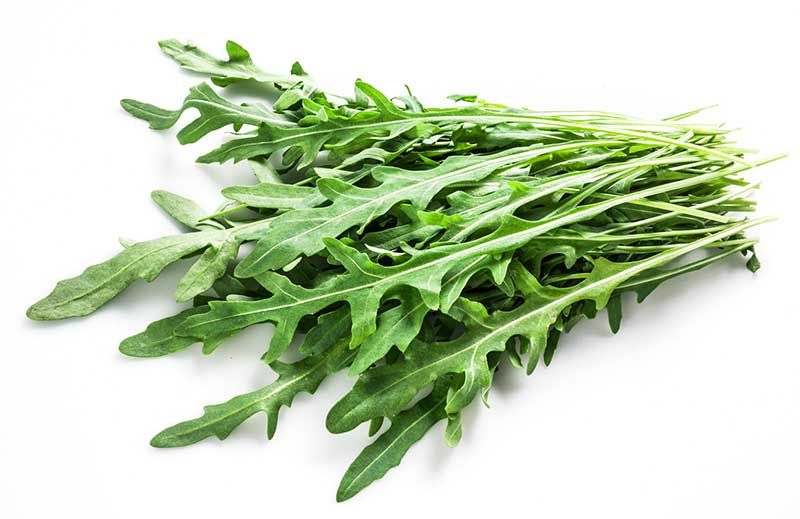
Italian arugula has small, neat leaves about 11 cm long, the size of the leaves and the appearance of the bunches are always the same and it is characterized by a delicate taste. Its disadvantage is that it withers quickly and lasts only a few days in top quality. Its price varies, it tends to be cheaper in summer. In the case of this genus, there are several ambiguities in both the lay and professional worlds. Its Latin name is already a bit questionable, some botanists classify the subspecies ‘sativa’ as a separate species, while insiders are looking in vain for significant differences between these two plants. However, we are not interested in botanical ordering or minor morphological differences, but in the correct slightly pungent taste, which is typical for arugula. Its taste is probably most similar to radish, with which it is related, and their content substances are also very similar.
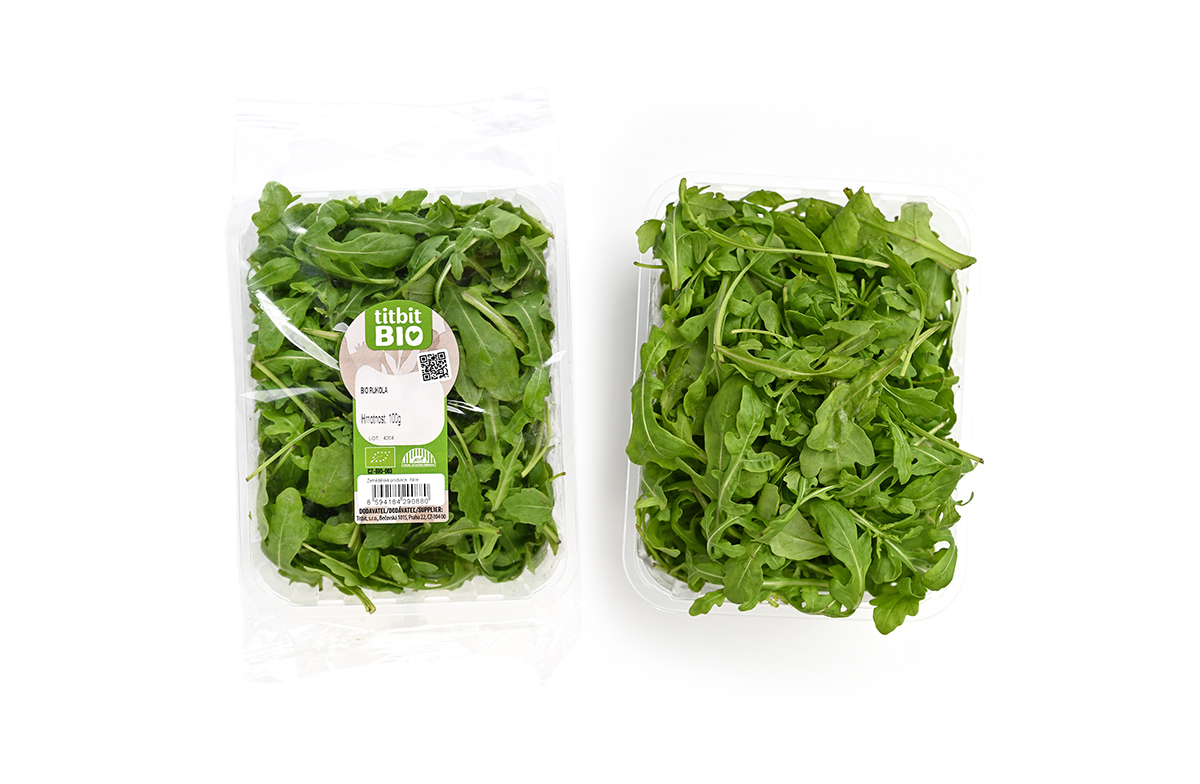
The washed version then differs in that it is washed, dried and is available in smaller packages – usually 125 g each. The disadvantage is the fact that it is usually difficult to see into the package – the foil is very branded and the bad sheets are usually at the bottom, where it is hardest to see. It has a stable price all year round.
The last species is Israeli arugula. It has large leaves, sometimes up to 18 cm long, but they are of different sizes, so they do not look as attractive as the Italian one. In terms of taste, it is much more pronounced than the European one, sometimes even strongly bitter. The advantage is that it lasts in good quality over a week, it has a stable price all year round, which is advantageous in winter, less so in summer.
“There is also a German variety on the Czech market, which also tastes good, it is closer to the Italian one, but we only send the Italian one to demanding chefs,” adds Řodník.
Eating arugula is beneficial to health for several reasons. It contains a large amount of vitamin C and beta-carotene. This provitamin A is one of the most important antioxidants for the human body. It also supports the proper function of vision, ensures a youthful appearance of the skin, delays the process of wrinkle formation and skin aging itself.
The substances contained in arugula increase appetite and have a positive effect on the purity of the blood and liver. A decoction of the root helps with digestive problems, and its leaves are valuable fighters against spring fatigue and weakened immunity. It also has mild diuretic and laxative effects and has a positive effect on digestion by protecting the gastric mucosa from stomach ulcers and inflammation. Like other salads, it is a very dietary food, containing only about 30 calories per 100 grams. It belongs to the cruciferous family, so it is related to kale, broccoli, radishes, Brussels sprouts, kohlrabi, but also watercress or mustard. All plants from this family are a source of isothiocyanates, which have anti-carcinogenic effects, so by eating cruciferous plants, we protect the body from cancer. In addition to the already mentioned vitamins, it is also a rich source of iron, calcium, magnesium. Its frequent consumption is recommended, among other things, by doctors as a prevention of osteoporosis.