


Tarragon
Product line

Packaging
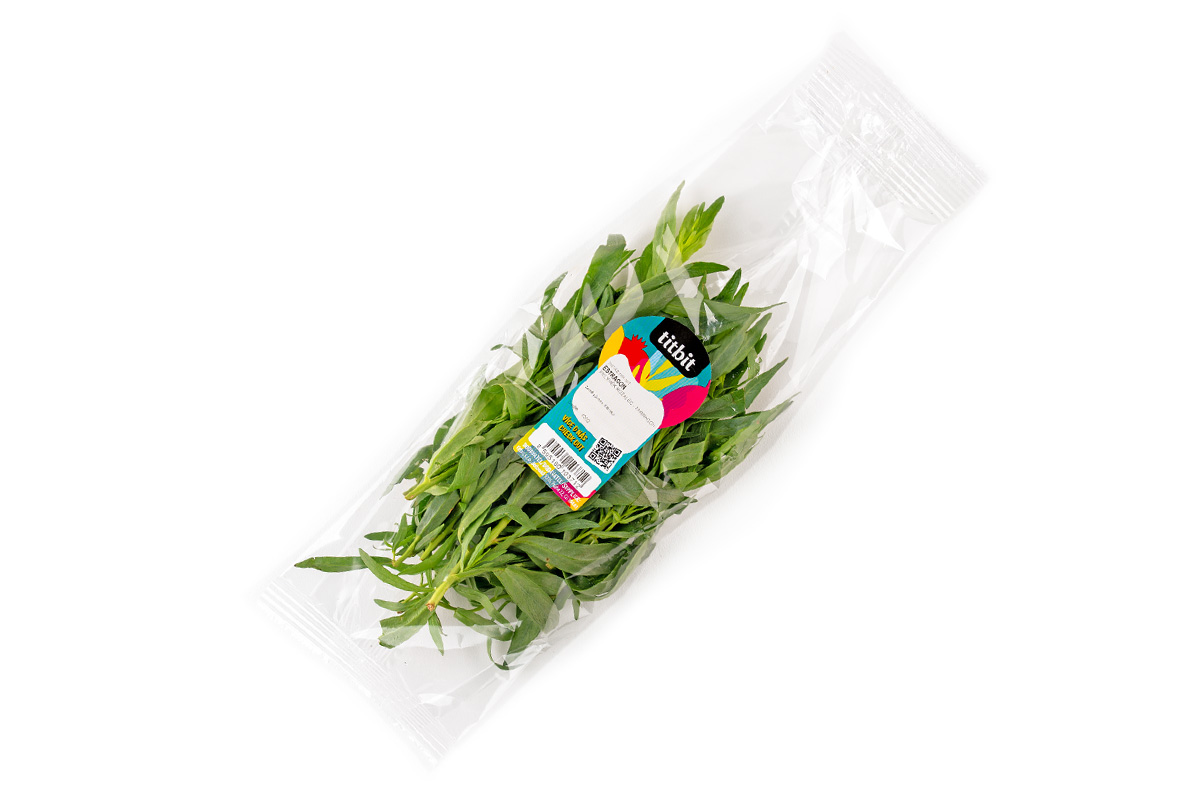
- Flowpack 30 g
- Flowpack 100 g
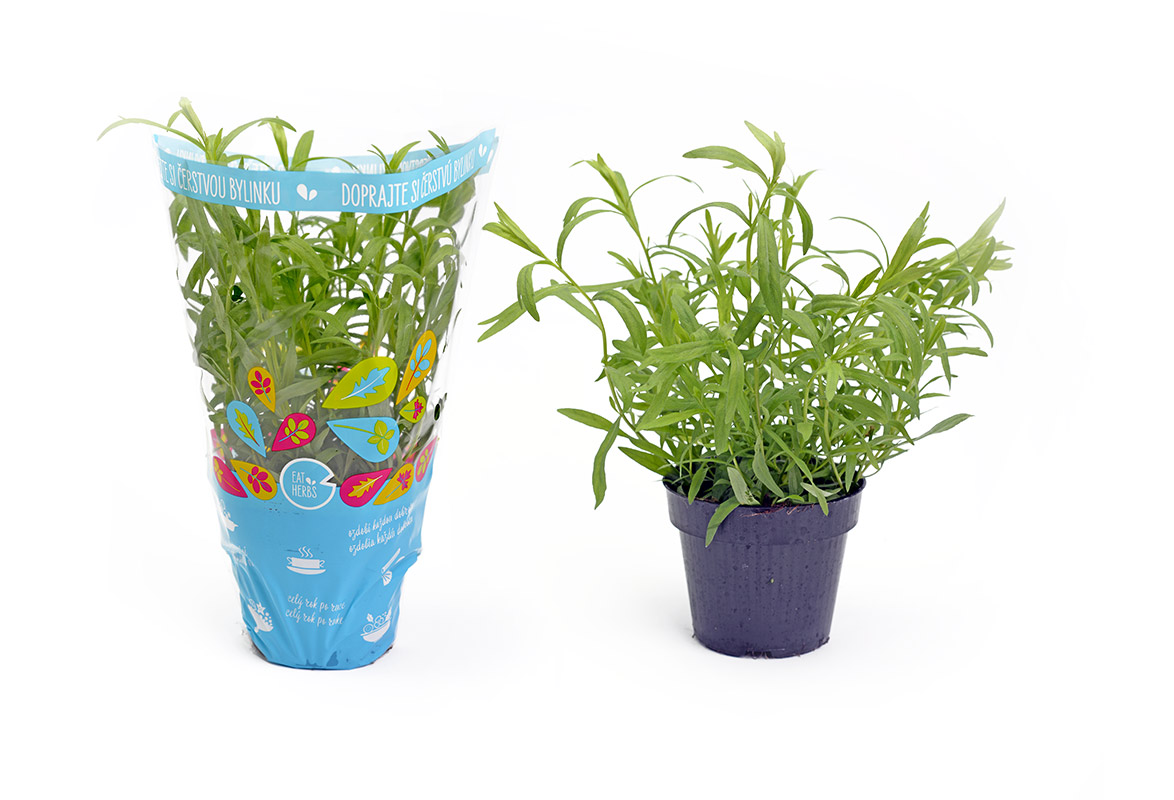
- Květináč 12 cm
Availability by month
- 1
- 2
- 3
- 4
- 5
- 6
- 7
- 8
- 9
- 10
- 11
- 12
Related products and ingredients


cooperation
Are you interested in our product line?
Would you like to know our prices, try some samples, or take a tour of our facility?
We supply restaurants and hotels
Orders 24 hours a day
- Delivery to most cities in the Czech Republic—call +420 608 217 567
The correct botanical name for tarragon is wormwood or tarragon wormwood. This plant belongs to the starfish family. In favorable habitats, it reaches a height of about 150 cm. Its leaves are lush green, entire, narrow, long-pointed with a very short petiole and slightly fluffy. Its shape resembles a grass leaf. The flower is a very inconspicuous patch of greenish-yellow color. The amount of aromatic substances in tarragon is closely related to the insolation of its habitat. The sunnier the place, the more essential oils in the stems and leaves. The seed of tarragon is a small achene.
Tarragon can be grown in two forms, Russian tarragon is a less delicate, robust plant, which, however, is not as mildly aromatic compared to the second form, the so-called French or German tarragon. However, French tarragon also thrives in our country. It needs to be pre-grown in a greenhouse or in a room and is then grown only as an annual.
Tarragon is characterized by a sweetly bitter, pungent taste and a spicy aroma, reminiscent of licorice.
Tarragon is mostly used in French cuisine, especially as a salad spice, in omelets, soups, venison, lamb and fish specialties and seafood dishes. It is also great with poultry. It also goes well with beans, peas or potatoes. It is also widely added to pickled vegetables. It is also used sporadically and in very small doses in desserts and cocktails, to which it gives a pungent touch.
Tarragon is an integral part of Dijon mustard and Béarnaise sauce. It is also used to prepare tarragon vinegar, which has a pleasantly bitter aroma.
Tarragon is not one of the herbs that can be stored in the refrigerator for a long time. Its leaves soon turn yellow and rot, which is why they are also dried or frozen. It can also be used to prepare an infusion in oil.
Tarragon is added to the dish just before cooking.
Tarragon was previously used as an antidote against snake bites and other poisons. It was also used to expel parasites from the body. It is said that if tarragon is not torn regularly, its individual plants will suffocate with each other. Its Latin genus name Artemisia is derived from the name of the goddess Artemis, who was the protector of virgins. It was so named apparently because some species of this genus have abortive effects. The species name dracunculus means little dragon. There are two explanations for this, one version claims that it is due to the branched root system, which resembles a dragon. According to the second theory, this is due to the shape of the leaves, which resemble dragon tongues. Tarragon has also been used in medicine and folk medicine since ancient times to relieve cramps, stimulate digestion and bile production. Its essential oils are also used in liqueurs.

