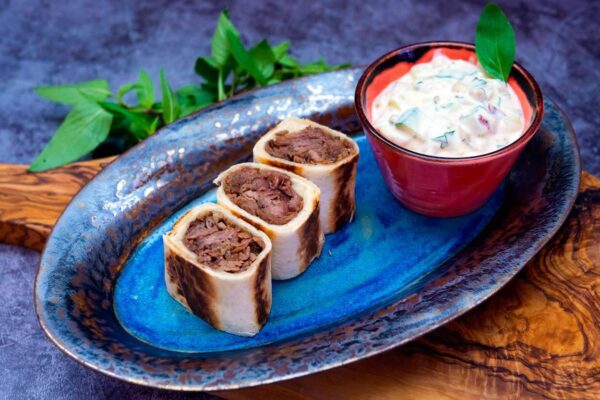
Thai basil
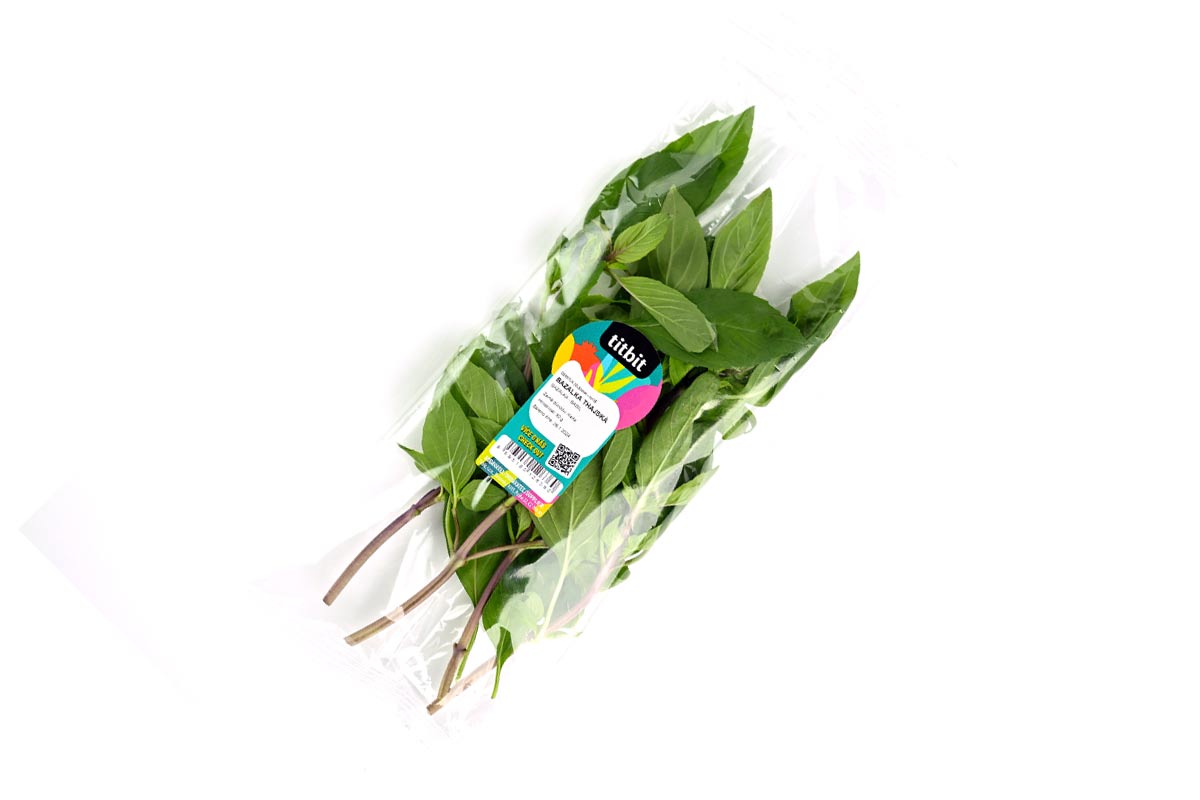

Product line


Packaging
- Flowpack 30 g
- Flowpack 100 g
Availability by month
- 1
- 2
- 3
- 4
- 5
- 6
- 7
- 8
- 9
- 10
- 11
- 12
Related products and ingredients


cooperation
Are you interested in our product line?
Would you like to know our prices, try some samples, or take a tour of our facility?
We supply restaurants and hotels
Orders 24 hours a day
- Delivery to most cities in the Czech Republic—call +420 608 217 567
Thai basil is a cultivar of basil, and its plant is quite different from ordinary basil. It is characterized by red square stems covered with fine hairs. The stem is, unlike ordinary basil, firm. The leaves of this anise basil, as it is also called, are narrowly lanceolate, entire, dark green with pronounced veining. They are never curled or bent. It blooms pink. Its most common cultivar is ‘Siam Queen’, which can be grown in our country with a little care.
The aroma and taste of Thai basil is also completely different and exotic for us due to its different silage composition. Its aroma is reminiscent of anise and the taste is slightly pungent and peppery.
Thai basil has an irreplaceable place in almost all Asian cuisines. It can be found especially in Thai, Vietnamese, Laotian and Cambodian specialties.
This variety of basil has been bred so that its aroma can withstand higher temperatures when preparing a dish. However, although it is added to food during cooking, it is impossible to imagine that this aroma will last forever. This is also due to the nature of Asian cuisines, which limit the preparation time to a minimum. Therefore, we cannot recommend the use of Thai basil, for example, in broths, long baking and similar heat-intensive preparations. It is especially suitable for meat and vegetable mixtures prepared in a wok pan, marinades, Asian soups and fish dishes. It is usually used in combination with garlic, fresh chili peppers, fish sauce and curries of all colors.
Even this cultivar, like ordinary basil, cannot be stored in the refrigerator for too long. The properties of anise basil are preserved even when dried, which is why it is dried and exported in Thailand. When cooking with dried basil, it is recommended to first soak it and only then add it to food.
One of the English names for this herb is ‘holy basil’. There are two versions of the explanation for this strange name. One refers to the fact that this plant is mentioned in the Bible. The catch, however, is that the said version does not specify either the book or the verse of the Bible. The second version, no more credible, is based on the fact that Hindus in India planted it around their shrines and used it in the kitchen. However, lovers of Thai basil are of the opinion that its divine taste is quite enough to justify this name.