


Persimmon
Product line



Packaging
- Twinpack
- Loose
Availability
cooperation
Are you interested in our product line?
Would you like to know our prices, try some samples, or take a tour of our facility?
We supply restaurants and hotels
Orders 24 hours a day
- Delivery to most cities in the Czech Republic—call +420 608 217 567
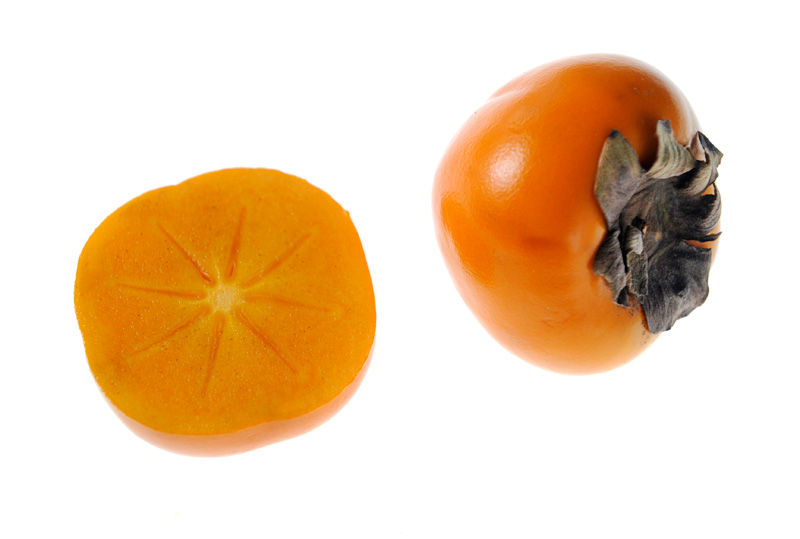
The simplified name used is persimmon. It is a shiny bright orange fruit, sometimes colored red and resembling a tomato. Persimmon is typical for its distinctive calyx composed of four petals at the stalk of the fruit. The size of the fruit is about 5-8 cm. The weight of the berries is up to 400 g. It has a specific sweet taste (something between peach and melon with a hint of vanilla). Unripe fruits, and especially the skin, have a bitter taste caused by the high content of tannins. Some variants generally have a higher content of tannins, which can be disposed of when the fruit goes through frost. For example, they are quite used to this species in Russia, where they put it outside the window in winter, thus removing its bitter taste and the fruit is sweet.
Persimmon is the name for a species that is divided into two subgroups that the consumer will encounter most often. These are Sharon (in Israel, the term “sharon fruit” is commonly used, because kaki means poop in Hebrew) and Persimmon. The fruits of Sharon are larger than Persimmon.
Persimmon fruits are most often eaten ripe and usually without skin. They are peeled, or the fruit can be cut and removed with a small spoon. It is possible to drizzle them with lime or lemon juice, in some Asian countries they are dried similarly to figs. Other uses are in salads, desserts, ice creams, sauces and sweet rice dishes. Persimmon is also used to make juices, marmalades and jellies.
It contains quite a lot of simple carbohydrates (a quick source of energy) and a large amount of fiber. Vitamins and minerals include vitamin C, potassium, as well as calcium, magnesium, phosphorus, iron, copper, manganese. The fruit is about 66% water.
Persimmon strengthens the immune system and metabolism, helps with stress, nervousness and fatigue, relieves muscle problems and has a beneficial effect on heart problems. In addition, it contributes to the health and strength of bones. Thanks to its high content of fibre and combined phenols, it is an ideal dietary supplement for arterial diseases, it works as a prevention of sclerosis and is also recommended for people with liver and kidney diseases. Persimmon also contains lycopene, which is an antioxidant that slows down the aging process. It also contains proteins, carbohydrates, amino acids and pectin, which guarantees the proper functioning of the intestines and helps reduce the amount of cholesterol in the blood.
It comes from Southeast Asia, and is imported to the Czech Republic mainly from southeastern Spain.
