Persimmon
⏱️ Reading time: 2 min
The persimmon is the fruit of a deciduous tree called the Japanese persimmon. It is currently grown mainly in subtropical regions around the world. In Europe, Spain is one of the largest producers, particularly the Valencia region. The kaki, also known as the persimmon, is often referred to as the “food of the gods.”

Origin and Cultivation
The persimmon is the sweet fruit of the Japanese persimmon tree, a tree that, as its name suggests, is native to Japan. This tree is found mainly in the subtropical zone; it has a spreading crown and grows to a height of about 15 m. From Japan, this tree spread through China all the way to Europe and the Americas.
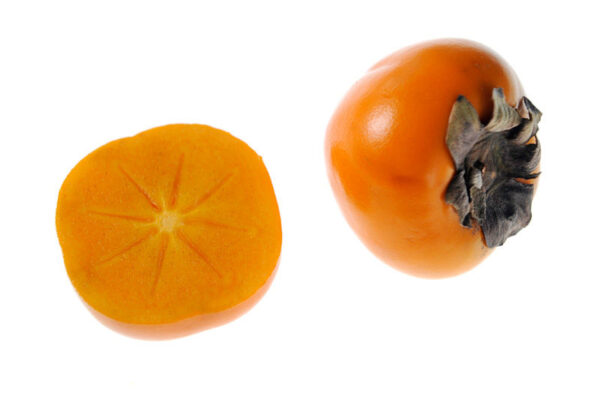
The persimmons available here come mainly from Valencia, Spain, and are of the Persimon Bouquet variety. This variety is prized mainly for its full-bodied and very sweet flavor. This fruit may resemble a tomato in shape. It has a distinctive yellow-orange color and grows to a size of 5 to 8 cm. A distinctive feature of the persimmon is its calyx, which consists of four sepals at the stem.
Health Effects
Like most fruits, persimmons consist mainly of carbohydrates and have a relatively high water content. The advantage is that it contains almost no fat, but is rich in soluble and insoluble fiber. Antioxidants and minerals such as magnesium, potassium, calcium, and phosphorus are also present. Persimmons are quite high in vitamin C, so they’re a good choice for naturally boosting your immune system. It is also recommended to consume it during times of mental strain, as it helps alleviate the effects of stress and nervousness. In addition, it boosts metabolism and combats fatigue.
Persimmons in the Kitchen
The best thing about this fruit is its versatility; it can be used in both sweet and savory dishes. It goes well in salads or with meat. You can also use it to make a delicious jam—perhaps combined with vanilla—or add it to smoothies. It tastes like sugar melon, pear, and peach. The advantage is that you can eat it with the skin on, as long as you don’t mind it.
Storing and Eating Persimmons
The persimmon is a fruit that’s actually quite easy to transport, especially the Persimon variety, which has a firm skin even when ripe that doesn’t bruise easily. The fruit is picked by hand and inspected before being shipped to suppliers. When shopping, make sure the fruit is evenly soft and isn’t bruised in any spots. The dark spots are not a problem; they are simply precipitated fructose.
Persimmons can be eaten with the skin on. Or you can peel it, or cut it in half and scoop it out with a spoon.