


Coconut

Product line



Availability
Related products and ingredients


cooperation
Are you interested in our product line?
Would you like to know our prices, try some samples, or take a tour of our facility?
We supply restaurants and hotels
Orders 24 hours a day
- Delivery to most cities in the Czech Republic—call +420 608 217 567
A coconut is actually a seed that contains the fruit of the coconut palm and is one of the largest seeds in the world.
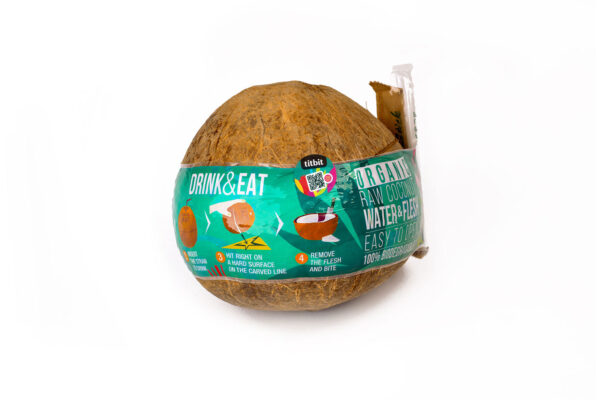
The egg-shaped “nuts” are about 15 cm in size, with a hard, woody shell covered in tough bast fibers, which remain on the surface as remnants of the green husk in which the nut grows. Both the shell and the fibers are dark brown. The three distinct “eyes”—openings at the top of the fruit—serve specific functions: two nourish the fruit as it ripens, while the third, covered only by a thin membrane, serves as a germination opening. The hollow fruit has white, firm, and脆 flesh about 1 cm thick, which lies tightly against the shell. Inside the fruit is coconut water, which is clear or milky in color and is sometimes mistakenly called coconut milk (however, coconut milk is a processed mixture of ground flesh and water).
Coconuts are very nutritious; they are rich in fats (up to 60%), proteins, and vitamins, as well as calcium, phosphorus, iron, and zinc, and contain relatively little sugar.
Coconut flesh is used fresh as a garnish for desserts, an ingredient in salads, and in the preparation of savory exotic dishes. It can be chopped and added to meat and rice or to Middle Eastern meat mixtures.
Dried coconut flesh is used as a decorative and aromatic ingredient in sweet dishes. Coconut milk is most commonly used in cooking. Coconuts are also used to make coconut flour, which is a staple food in many areas, as well as coconut oil and margarine.
The coconut palm is a very ancient plant, and its origin is not entirely clear. This is because coconuts are hollow, can remain afloat in water for several months, and can drift great distances across the ocean. They were already being cultivated in the Indian Ocean region 4,000 years ago, and fossils dating back several million years have been discovered in various parts of the tropics. Today, coconuts are widespread throughout the tropics and are a very important crop there.
