


Plantain
Product line



Packaging
- Loose
Availability
Related products and ingredients

cooperation
Are you interested in our product line?
Would you like to know our prices, try some samples, or take a tour of our facility?
We supply restaurants and hotels
Orders 24 hours a day
- Delivery to most cities in the Czech Republic—call +420 608 217 567
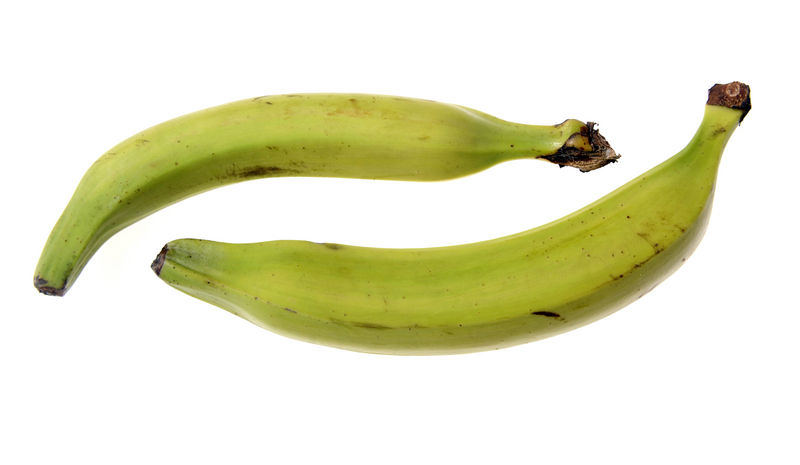
These are larger bananas with a tougher peel, used primarily for cooking. Only when cooked does the large amount of starch convert to sugar, changing the flavor of these vegetable bananas. At first, the fruits are green—these unripe bananas have a starchy, potato-like, and bitter taste and aren’t even suitable for cooking. Gradually, however, they turn yellow and then develop black spots, which is a sign that they are ready to be eaten after cooking. When fully ripe, they are completely black—these can also be eaten raw.
Plantains have a wide range of culinary uses. Ripe plantains are often used to make a porridge called fufu, which is particularly popular in Africa and the Caribbean. However, you can also fry, boil, bake, sauté, or dry them; grind them into flour; and in Africa, people even brew beer from these bananas. A popular way to prepare them is to cut them into strips and fry them into crispy chips. They are also a favorite side dish served with meat or rice.
Plantains contain vitamins B6, C, and K, as well as beta-carotene and folic acid. Therefore, eating them is beneficial to human health, particularly in terms of blood formation, blood clotting, and red blood cell production. In terms of minerals, they contain iron, magnesium, zinc, iodine, phosphorus, and selenium. They are an important food in East and Central Africa and in some parts of Asia, where people were likely already familiar with and eating them as early as the 6th century B.C. These vegetable bananas are available year-round and originate from India and Southeast Asia. In some countries, large plantain leaves are used as plates.