


Cabbage
⏱️ Reading time: 3 min
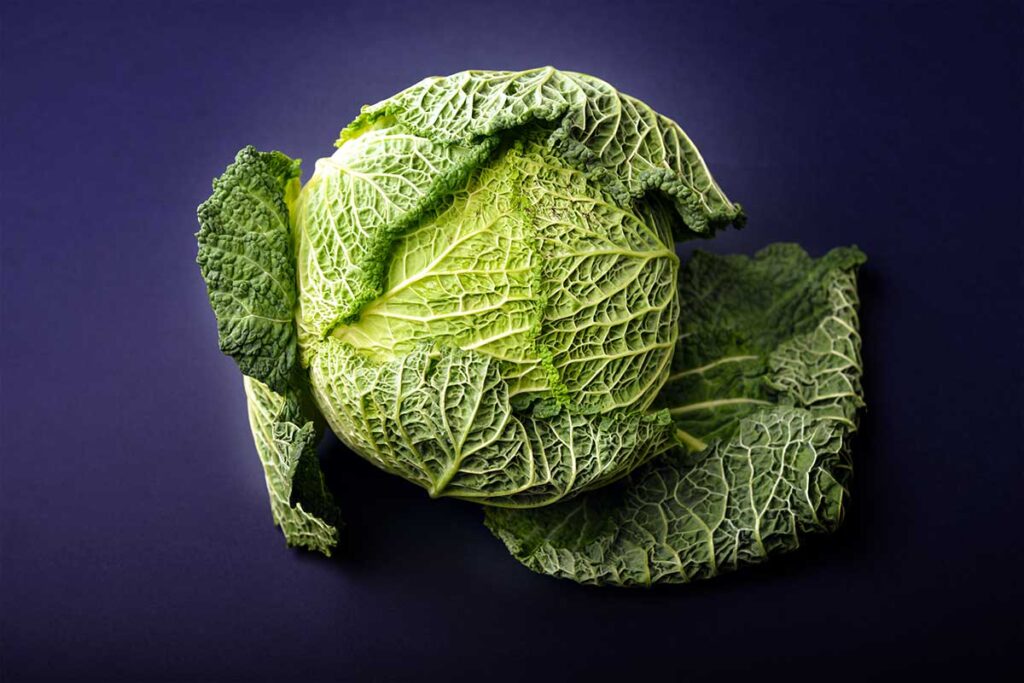
Most of us associate cabbage with the school cafeteria and something unidentifiable on our plates. But we’re here to convince you that there’s another way. Cabbage is a very healthy vegetable that not only tastes great—for example, in a fresh salad—but is also packed with vitamins and antioxidants.
Origin and Cultivation
Cabbage, also known as brussels sprouts, belongs to the brassica family. References to it date back to ancient Mesopotamia and Egypt. It appeared in our region in the late 16th century, when it began to be cultivated in the Czech lands as well. One advantage of cabbage is that it can withstand frost. Some varieties may even benefit from it, as their leaves become more tender and crisp.
The types of cabbage commonly available in our stores include head cabbage, Brussels sprouts, and curly kale.
Health Effects
Cabbage is a valuable source of vitamins E and K, which are fat-soluble. It is therefore a good idea to prepare it with various oils so that the body can make the most of these nutrients. It also contains B vitamins and vitamin C, of which it has more than the recommended daily intake. So if you suffer from vitamin deficiency in the winter, cabbage is a readily available source. As for minerals, it’s rich mainly in potassium, magnesium, and iron.
Regular consumption is especially beneficial for people with high cholesterol, as it cleanses the blood vessels. In addition, it boosts metabolism and rids the body of toxins, which is particularly helpful for people trying to lose weight.
Cabbage in the Kitchen
Cabbage has a distinctive taste and aroma. To create truly delicious dishes with it, you should be creative and not be afraid to use it in ways other than in soup or as a steamed vegetable side dish with meat. You can make a very tasty salad with cabbage that will pleasantly surprise you and provide you with important vitamins.
Purchasing and Storage
A good head of cabbage should be firm and free of any signs of rot. The outer leaves, however, may be slightly damaged or a bit wilted. We need to remove those, though, so that we’re left with a really nice head of cabbage.
Although cabbage will keep in the fridge for a while, it’s best to use it as soon as possible. If you want to stock up, it’s better to freeze it. Before doing so, however, you must blanch it briefly, cool it under cold water, and let it drain.
One advantage of cabbage is that it can withstand frost. However, it must be harvested only after the frosts have passed. During the winter months, cabbage is mainly imported from Italy and France. Starting in March, it comes from Spain, and domestic production gradually begins as well.
If you prefer Brussels sprouts, you can try the convenient “Wash and Cook” packaging from Titbit, which is available at Makro stores and on rohlik.cz.